The Ultimate Guide to Artificial Skylight Windows

Natural light is a fundamental pillar of wellness and modern architecture. However, not every space—from a basement flat in London to a high-rise apartment in Mumbai/ Delhi / Bangalore – can accommodate a traditional roof opening. So, for this the perfect solution is Artificial Skylight Windows.

In 2026, the Artificial Skylight Windows have moved beyond simple LED panels to become sophisticated “virtual portals” to the sky. Below is the complete guide to the latest designs, tech, and applications.

What is an Artificial Skylight Window?

An artificial skylight window is a lighting solution that mimics natural daylight using LED panels, optical diffusion technology, and automated light simulation. Unlike traditional skylights, they don’t require structural modifications or wall openings.

Artificial Skylight Window Designs

Different architectural styles require different lighting silhouettes. Here are the most popular artificial skylight window designs currently defining luxury interiors:

1. French Window Style

Designed with elegant, symmetrical cross-bars, these mimic the look of classic Parisian rooftop windows.

  • Best for: Luxury master suites and grand dining rooms.
  • Vibe: Sophisticated and timeless.

2. Arch Window Skylight

These add a classic European aesthetic, softening the sharp lines of modern rooms with a graceful curve.

  • Best for: Entryway hallways and boutique retail interiors.
  • Vibe: Architectural and artistic.

3. Louver Window Skylight

Mimicking structured slats, these provide a contemporary, directional light illusion that feels fresh and structured.

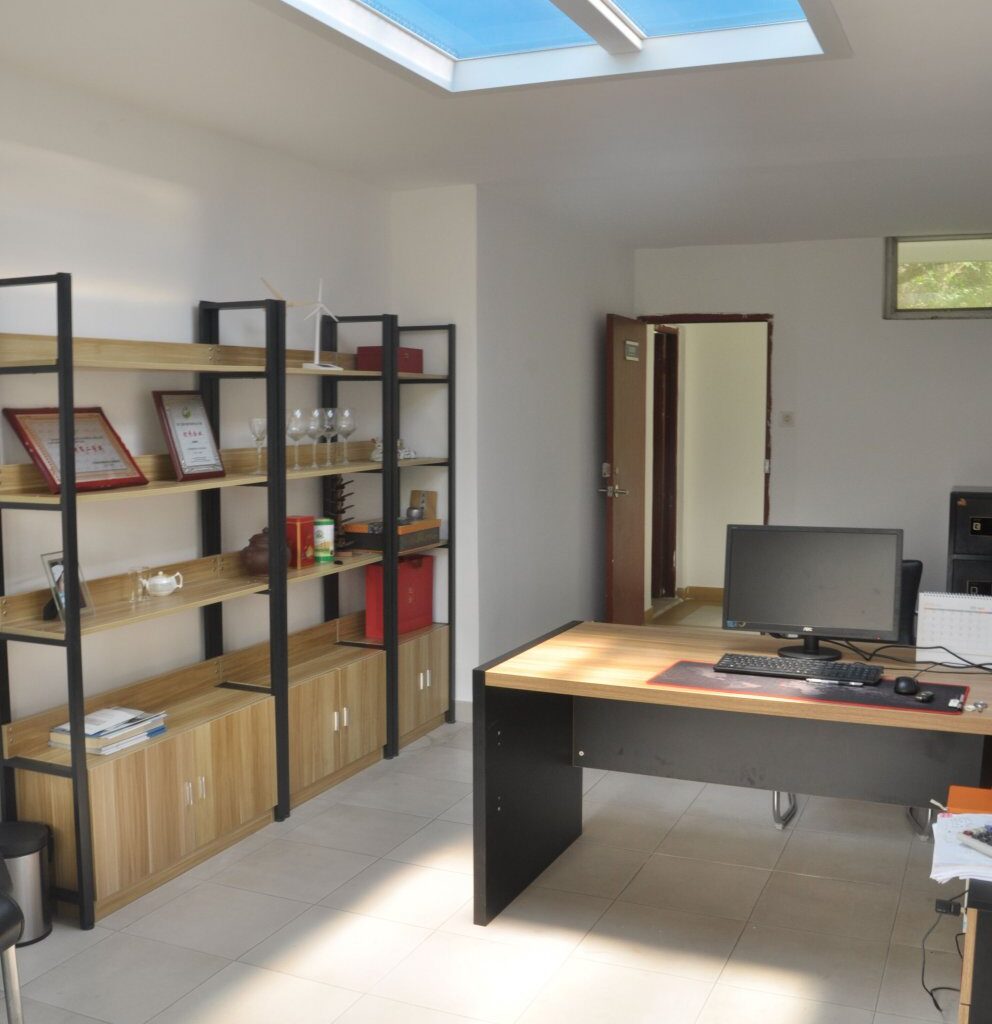
  • Best for: Modern kitchens, high-productivity home offices, study rooms.
  • Vibe: Minimalist and industrial.

Room-wise Applications of Artificial Skylight Windows

Bedrooms

Circadian rhythm syncing makes artificial skylights genuinely transformative here. A gentle simulated sunrise beats any alarm clock, and the gradual transition to warm evening tones prepares the body for sleep without a single manual adjustment.

  • Enhances sleep quality
  • Ideal for windowless bedrooms

Living Rooms

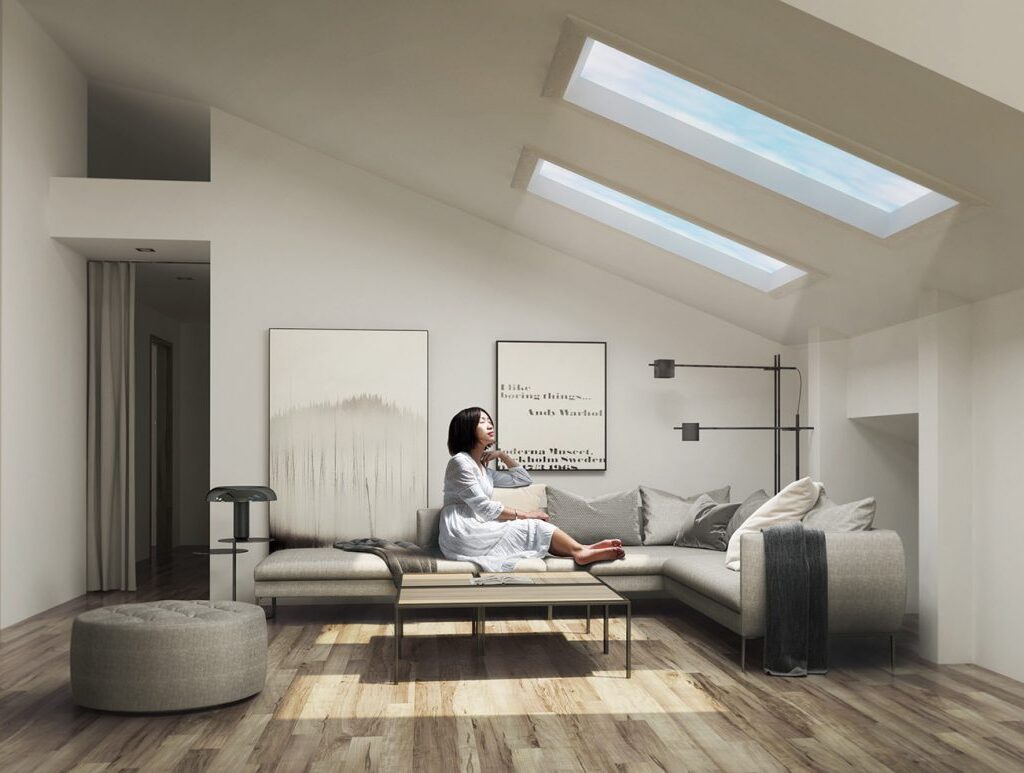
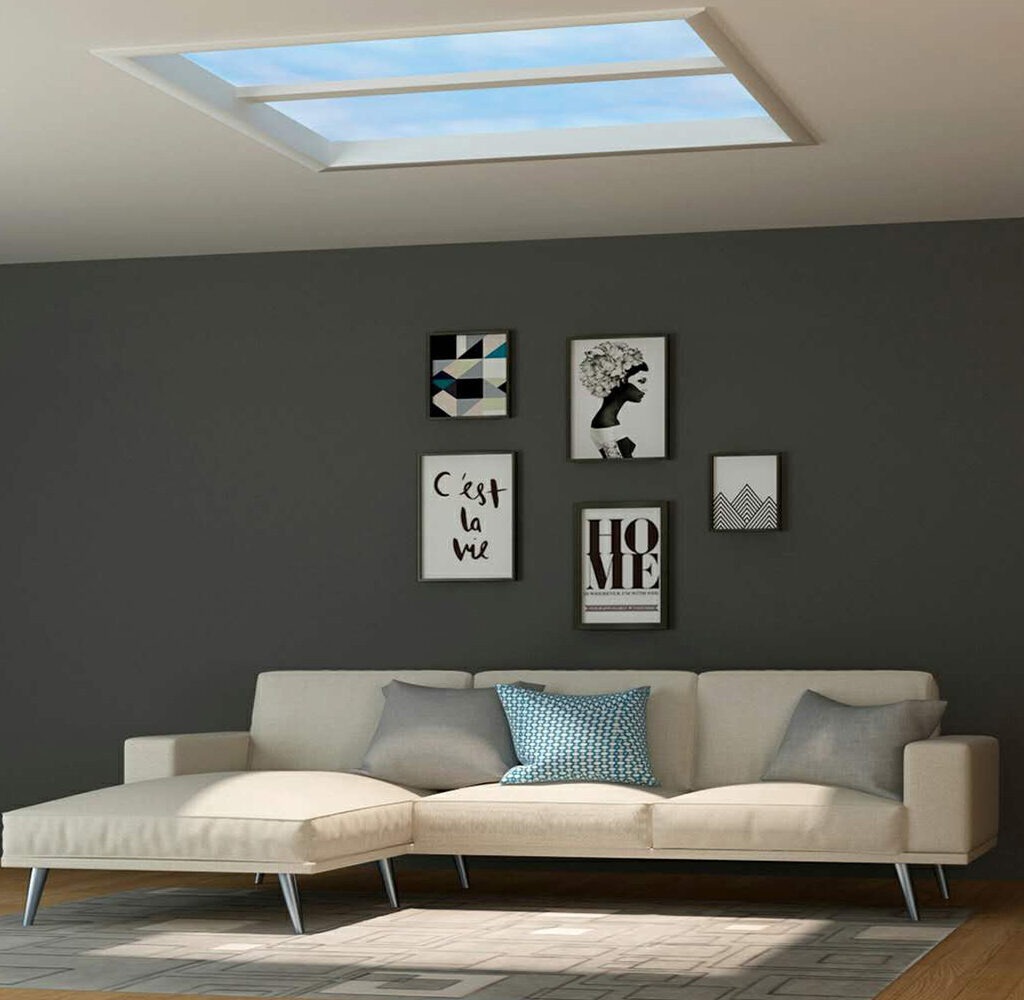
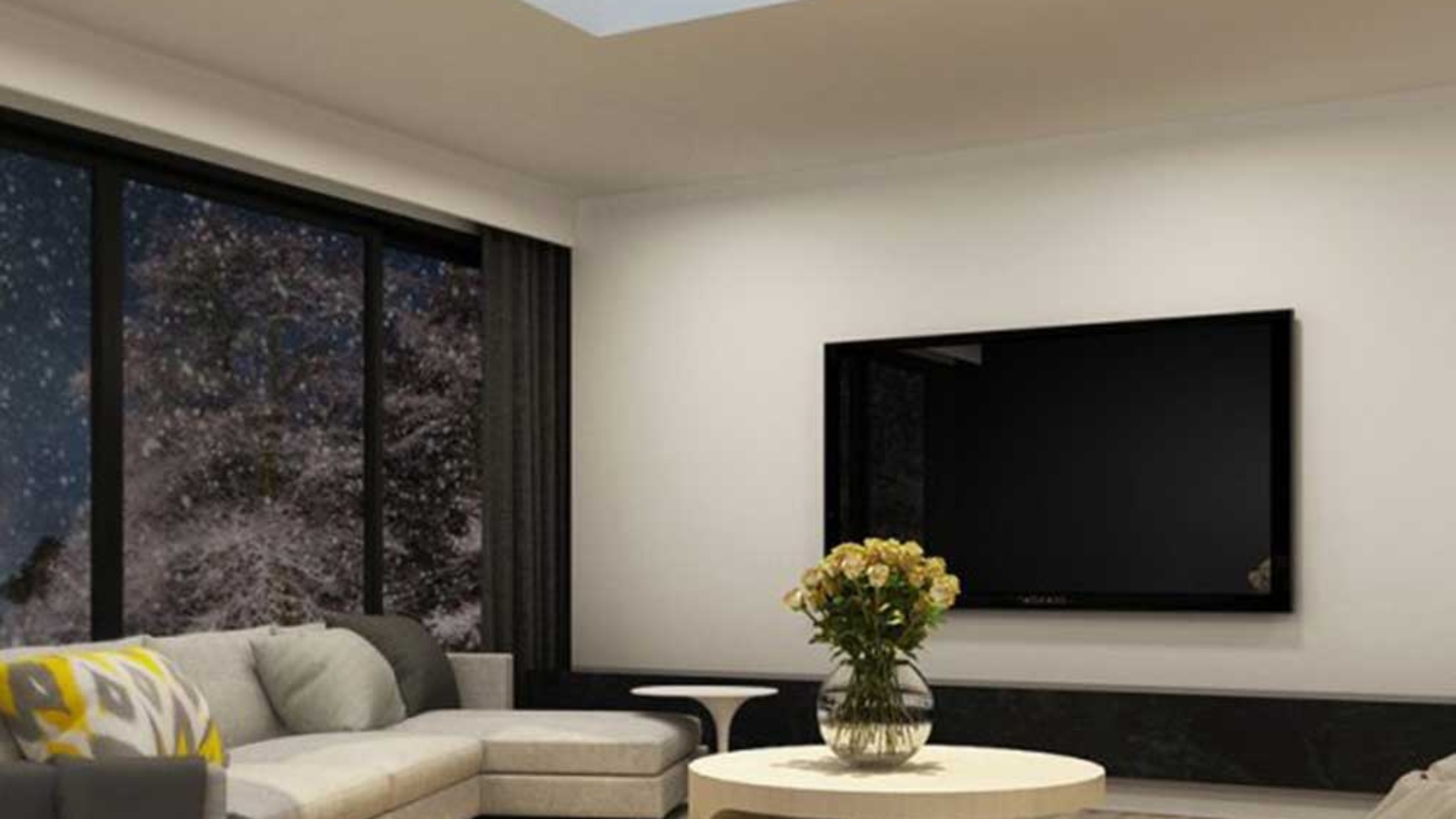
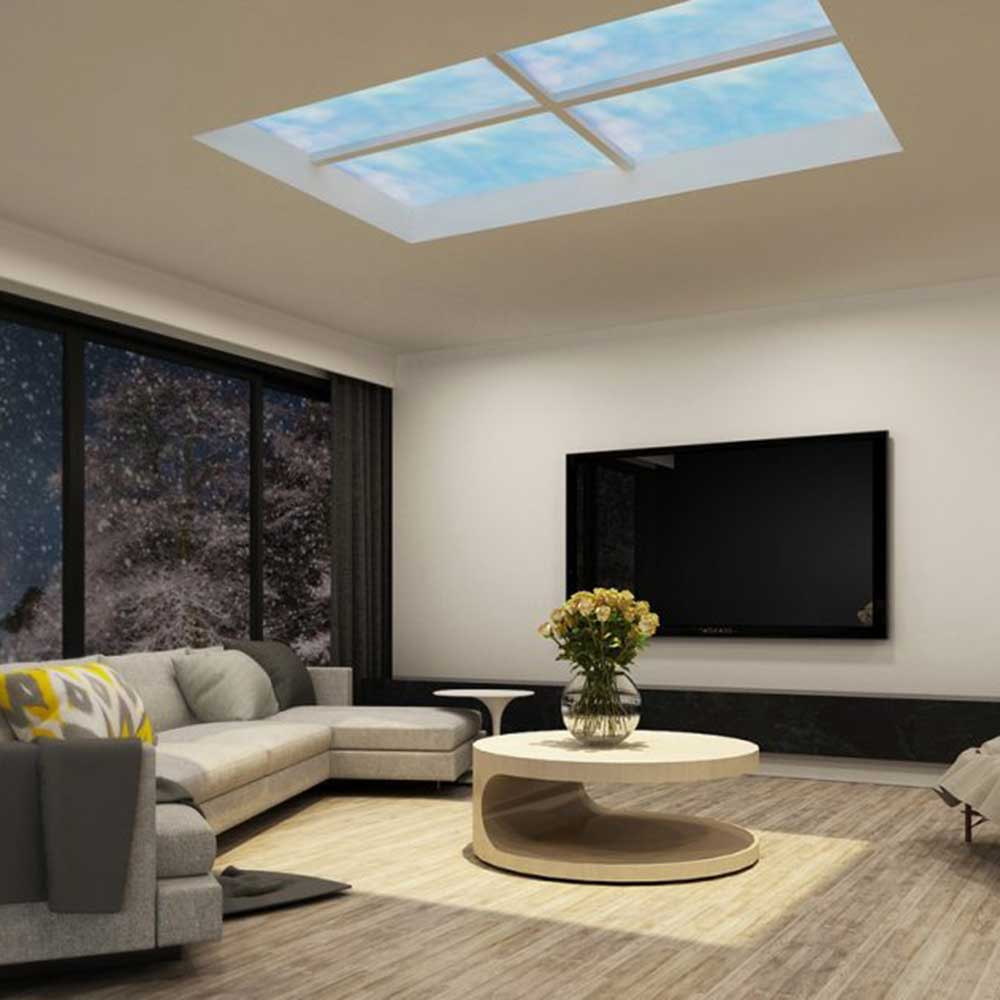
A well-placed skylight panel becomes the room’s defining feature. It draws the eye upward, adds a sense of openness, and all but eliminates the need for daytime supplemental lighting.

  • Adds luxury appeal
  • Reduces need for daytime lighting

Study Rooms & Home Offices

Focus follows light. Cool, consistent daylight-spectrum illumination reduces eye strain and supports longer, more productive working hours — especially relevant for remote workers without window access.

  • Improves focus and productivity
  • Reduces eye strain

Kids Rooms

Dynamic light effects aren’t just fun; research increasingly links quality light exposure to improved mood, creativity, and sleep in children.

  • Creates playful effects
  • Improves mood and creativity
  • Reduces need for daytime lighting

Bathrooms

Bathroom is often the most neglected room in any lighting plan. An artificial skylight turns a windowless bathroom from a clinical box into something spa-adjacent.

  • Ideal for windowless bathrooms

Kitchens

Bright, shadow-free illumination matters when you’re chopping, plating, and cooking. A louver-style skylight here does functional and aesthetic work simultaneously.

Wellness Tech: Circadian Rhythm Syncing

The biggest leap in 2026 isn’t the hardware — it’s the intelligence behind it.

The category leader right now is Human-Centric Lighting (HCL), which uses programmed intensity & CCT (Correlated Color Temperature) adjustment to mirror the sun’s actual arc over your location throughout the day:

  • Morning (6500K): Cool, crisp light that suppresses melatonin and signals the brain to switch on.
  • Afternoon (5000–5500K): Neutral daylight that sustains alertness without fatigue.
  • Evening (2700K): Warm, golden tones that ease the body toward rest.

This isn’t a scheduled timer — it’s a live calculation based on your geographic coordinates.

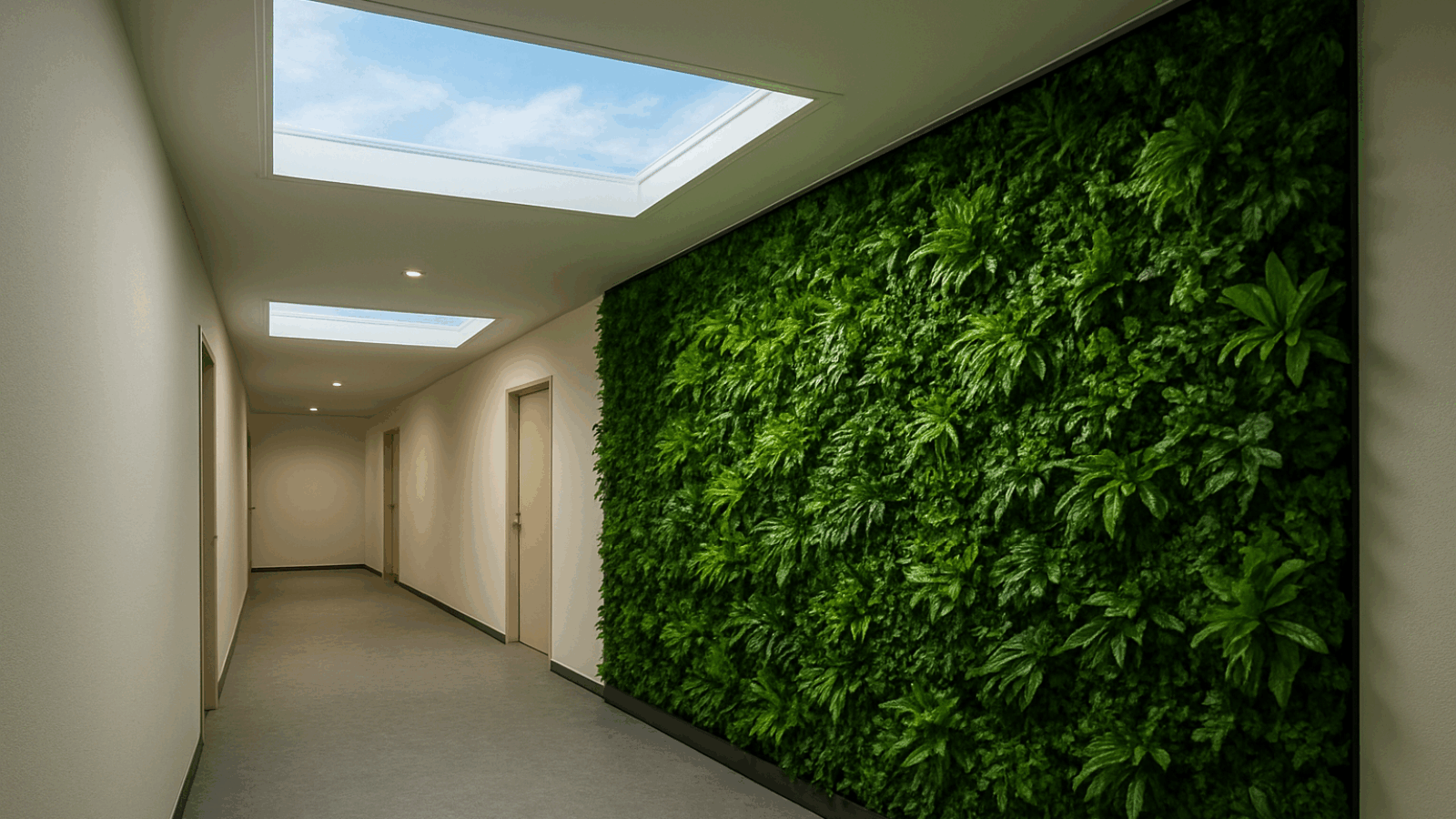
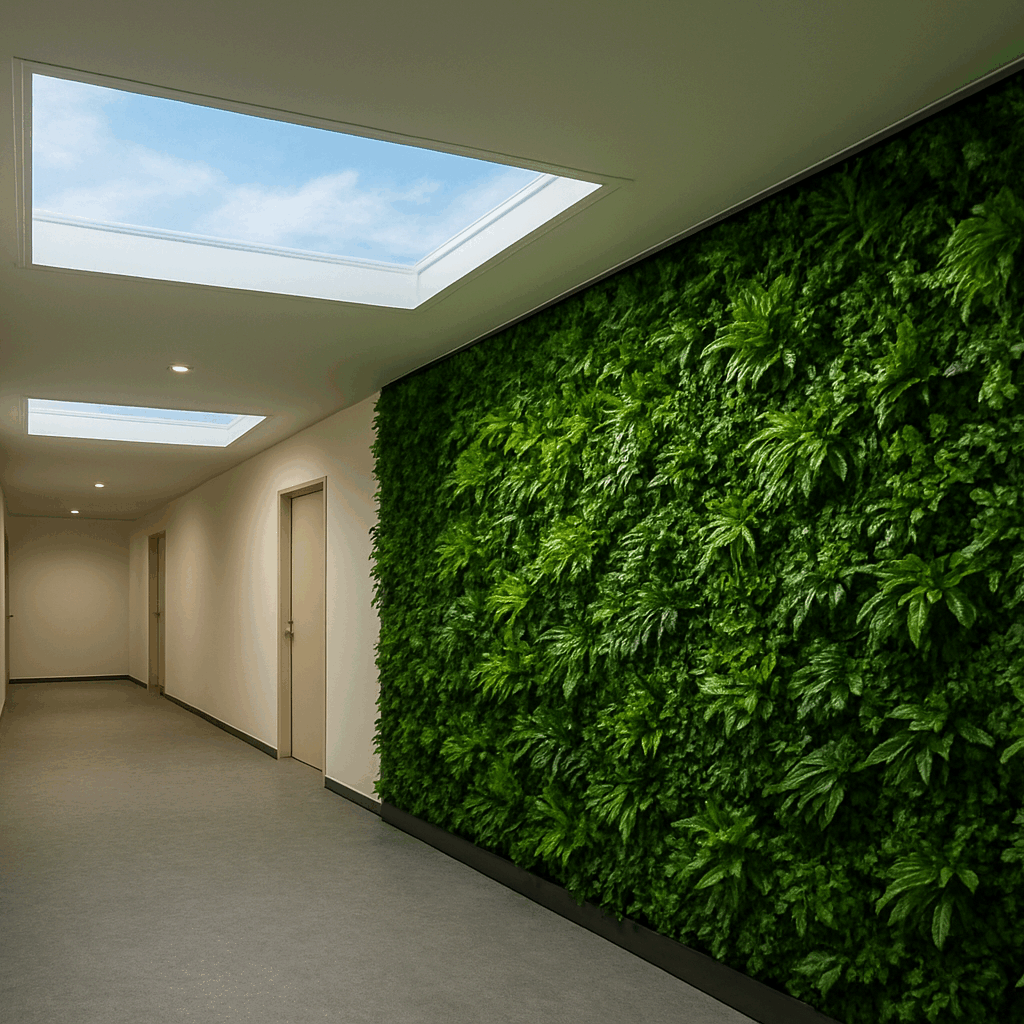
Another trend in interior design presently is using Biophilic elements & our artifical skylight solutions can add value to biophilic designs, promoting wellness and health benefits.

Quick Comparison: Artificial Skylight vs. Natural Skylight

FeatureArtificial Skylight WindowReal Skylight
InstallationEasy, no structural changesRequires roof cutting
CostModerateExpensive installation
MaintenanceLowHigh (leakage, cleaning)
Light ControlAdjustable brightness & colorDepends on weather
Energy EfficiencyLED-based, efficientNatural but heat gain/loss
PlacementAnywhere (walls/ceilings)Only roof areas
Weather DependencyNoneHigh
Aesthetic FlexibilityHigh (custom designs)Limited

Benefits of Artificial Skylight Windows

  • ✅ No construction hassle
  • ✅ Works in windowless spaces
  • ✅ Customizable brightness & color temperature
  • ✅ Energy-efficient LED technology
  • ✅ Ideal for both residential & commercial spaces

Technical Specs for the Serious Buyer

When considering a high-end installation in 2026, ensure it hits these benchmarks:

  • CRI (Color Rendering Index): 95+ (True-to-life colors).
  • UGR (Unified Glare Ratio) < 16 Low Glare
  • Flicker Index: 0.00 (Crucial for health and eye comfort).
  • High Efficiency: Superior optics & materials ensure energy savings
  • Integration: Automated and optional control with leading protocols.

Final Thoughts

Artificial skylights have earned their place as a legitimate design and wellness investment — not just a workaround for difficult spaces. The combination of architectural flexibility, circadian health benefits, and increasingly sophisticated controls driven light simulation means the gap between “artificial” and “natural” light experience is narrowing faster than most people realize.

If you’re working with a windowless room, a basement conversion, or a commercial space that needs a light upgrade without structural disruption, this is where to start.

Have a specific project in mind? Drop your space type and dimensions in the comments — happy to point you toward the right design.

FAQs: Artificial Skylight Windows

1. Are artificial skylight windows worth it?

For windowless spaces or buildings where a structural skylight isn’t feasible, absolutely. The wellness benefits alone — particularly for sleep and focus — justify the investment for most buyers.

2. How much do they cost in India and the UK?

Pricing varies significantly by size, technology tier, and customization level. Entry-level panels start at accessible price points; high-spec HCL units with smart integration sit at the premium end.

3. Can they replace real sunlight?

They replicate the visual and circadian experience of daylight remarkably well. They don’t provide Vitamin D — that still requires actual sun exposure or supplementation.

4. Are they energy-efficient?

Yes. LED-based systems are inherently efficient, and smart dimming means they only draw full power when needed.

5. Where can you install them?

Anywhere with a ceiling or wall surface and access to power — bedrooms, kitchens, bathrooms, offices, commercial spaces, basements, and beyond.
Skylight

Static vs Dynamic Simulated Skylights — A Complete Comparison

Bring the sky indoors — but which approach fits your project?
Artificial skylights (also called simulated/ virtual skylights/ faux skylights) are no longer a single product category: they range from simple, beautifully diffused static panels to advanced, animated systems that simulate cloud movement, sun position and even starfields. Choosing between static and dynamic simulated skylights affects cost, installation complexity, energy use, occupant comfort, design impact, and long-term maintenance. This guide compares the two approaches in depth so that architects, interior designers, facility managers, and homeowners can make an informed choice.


Quick Snapshot — The Short Answer

  • Static simulated skylights = fixed daylight-like illumination. Lower cost, simpler install, lower maintenance, excellent for general ambient light, and consistent appearance.
  • Dynamic simulated skylights = time-varying or animated sky simulations (cloud movement, dawn-to-dusk CCT shifts, starfield modes). Higher realism and biophilic impact, more controls and complexity, higher cost, and slightly higher maintenance demands.

Comparison Table: Static vs. Dynamic Simulated Skylights

FeatureStatic Simulated SkylightDynamic Simulated Skylight
Primary FunctionConsistent, high-quality ambient daylight reproduction.Immersive experience with motion and time-based transitions.
Visual EffectConstant, evenly distributed light.Cloud movement, dawn-to-dusk profiles, night stars.
Technical CoreLED arrays + high-performance diffusers.LED backbone + video processor + pixel-mapped drivers + content engine.
Control SystemBasic dimming, CCT controlDedicated media server/box, scheduling software, with dimming & CCT control
Biophilic ImpactProvides a calming, stable daylight field; reduces “closed-in” feeling.High engagement; perceived motion reduces stress and increases “wow” factor.
Occupant SuitabilityBest for focus-heavy areas (libraries, classrooms, open offices).Best for experiential spaces (lobbies, spas, luxury residential, therapy).
ComplexityLow; fits standard ceiling grids easily.High; requires coordination for depth, processors, and seamless tiling calibration.
Upfront CostComparatively Lower (driven by panel size and CRI).Higher (adds hardware, processors, and mounting kits).
MaintenanceMinimal (LED life and cleaning).Minimal (LED life and cleaning).

Now let’s read in detail a full, practical comparison — from tech and design to real use cases and purchasing guidance for static vs dynamic skylight.


1. What do we mean by “static” and “dynamic” Skylight

Static simulated skylight


A static system is essentially a high-quality, well-diffused LED panel tuned to reproduce desirable daylight characteristics (brightness, uniformity, CRI, color temperature). Once mounted into the ceiling, it provides a constant, evenly distributed light without animation. Many static panels are tunable-white (can change between cool/warm CCT), but the light field itself does not simulate motion.

Dynamic simulated skylight


A dynamic simulated skylight system includes animation or time-based changes: cloud movement, changing sun angle, dawn-to-dusk color temperature profiles, or even nighttime star simulations. These systems couple LED fixtures with a media/animation engine and control electronics to produce a moving visual effect on a ceiling “sky” surface.


2. Core technical differences

Light source & quality

  • Static: Tunable white LED arrays or high-CRI fixed white LEDs, combined with engineered diffusers and light guides to remove hotspots. The focus is on spectral quality (CRI), uniformity, and consistent luminance across the panel.
  • Dynamic: Same LED backbone, but paired with a video/data processor and a pixel-mapped or segmented driver architecture to render motion. Dynamic realism depends on resolution (number of controllable zones), spectral fidelity, and the quality of the content engine.

Optics & diffuser

  • Static: Diffuser design is optimized to create an even, natural-looking glow. Microstructured diffusers, light-guide plates and scattering films hide LED sources and make the panel appear like a remote light source (the “sky”).
  • Dynamic: Diffusers must still provide uniformity but also allow animation to be perceived. Some dynamic solutions use layered optics or rear-projection techniques for higher realism.

Controls & integration

  • Static: Basic dimming, CCT control, simple schedules or integration with building automation (BMS) for on/off or daylight harvesting.
  • Dynamic: Requires a control server or media box, content scheduling software, often network connectivity (Ethernet or Wi-Fi), and integration options for synchronization with building time schedules or sensors.

3. Visual realism & human factors

Static panels

  • Provide a consistent, calming daylight field.
  • Excellent for occupants who prefer stable lighting conditions (libraries, classrooms, open offices where motion could distract).
  • Great for spaces where a “permanent daylight illusion” is desired without visual changes.

Dynamic simulated skylight systems

  • Offer stronger biophilic engagement — perceived motion (slow cloud drift) can reduce stress and give a sense of outdoors.
  • Dynamic CCT shifts (cooler daytime, warmer evening) can support circadian rhythm when scheduled appropriately. (See research linking light exposure to circadian entrainment and well-being.)
  • Risk: poorly tuned or overly fast animations can be distracting or fatiguing. Commissioning content carefully is crucial.

4. Use-case suitability

When to choose static

  • Standard office floors require consistent, non-distracting light.
  • Retail spaces focusing on product appearance, where no motion should detract from merchandise.
  • Corridors, meeting rooms, classrooms, and spaces with many occupants and low tolerance for moving images.
  • Projects with tighter budgets or retrofit constraints.

When to choose dynamic

  • Reception areas, lobbies, showrooms, wellness rooms, spa centers, and luxury residential spaces where experience and “wow” factor matter.
  • Healthcare recovery rooms and therapy spaces where carefully designed light schedules can improve patient comfort (but only with clinical oversight).
  • Spaces intended for relaxation or creative inspiration (meditation rooms or design studios).

5. Cost comparison & total cost of ownership

Upfront cost

  • Static: Lower. Costs driven by panel size, LED quality (CRI rating), and diffuser quality.
  • Dynamic: Higher. Adds processor/media hardware, custom content creation, segmented drivers, plus potential network/hardware integration.

Operational cost

  • Static: Lower energy use when dimmed or scheduled; straightforward maintenance.
  • Dynamic: Could be higher if run at peak brightness for long durations or if hardware/processor draws additional power. Smart scheduling and daylight harvesting mitigate this.

Maintenance & upgrades

  • Static: Minimal — LED replacement after long lifetimes; diffuser cleaning.
  • Dynamic: More involved — software updates, content refreshes, potential replacement of control hardware. However, software update capability allows visual refreshes without hardware changes.

6. Design integration & architectural considerations

Ceiling type & installation

  • Static panels can seamlessly fit into standard ceiling grids or be recessed into plasterboard ceilings.
  • Dynamic systems may require additional depth for processors or specialized bezel/frame work; careful coordination is needed with ceiling contractors, HVAC and acoustic design.

Scale & tiling

  • Static panels tile readily for consistent coverage.
  • Dynamic systems need careful alignment and content calibration across multiple tiles to avoid visible seams and to ensure continuity of motion.

Acoustic & HVAC coordination

  • Both systems should be planned with HVAC diffusers and speakers to avoid conflicts. Dynamic installations in sensitive environments should consider sound zoning and occupant feedback.

7. Content, controls, and human-centred design

Content matters

  • For dynamic systems, the content (the animation) determines acceptance. Slow, subtle cloud movement and naturalistic color transitions are preferred. Avoid high-frequency motion or abrupt color shifts unless thematically relevant.

Controls & personalization

  • Provide local overrides and user controls where appropriate. In workplaces, allow users to adjust intensity within safe parameters.
  • For circadian strategies, schedule daily CCT curves (morning cool, noon bright/cool, evening warm) and tie to occupancy sensors.

8. Energy & sustainability aspects

  • LEDs are efficient in both static and dynamic systems.
  • Dynamic simulated skylight system does not necessarily consume more energy if intelligently controlled — e.g., animations can be run at lower intensity, and the system can harvest daylight.
  • Energy-saving tactics: daylight harvesting, occupancy sensors, scheduled dimming and using high-efficiency drivers.

9. Real world examples & case studies (illustrative)

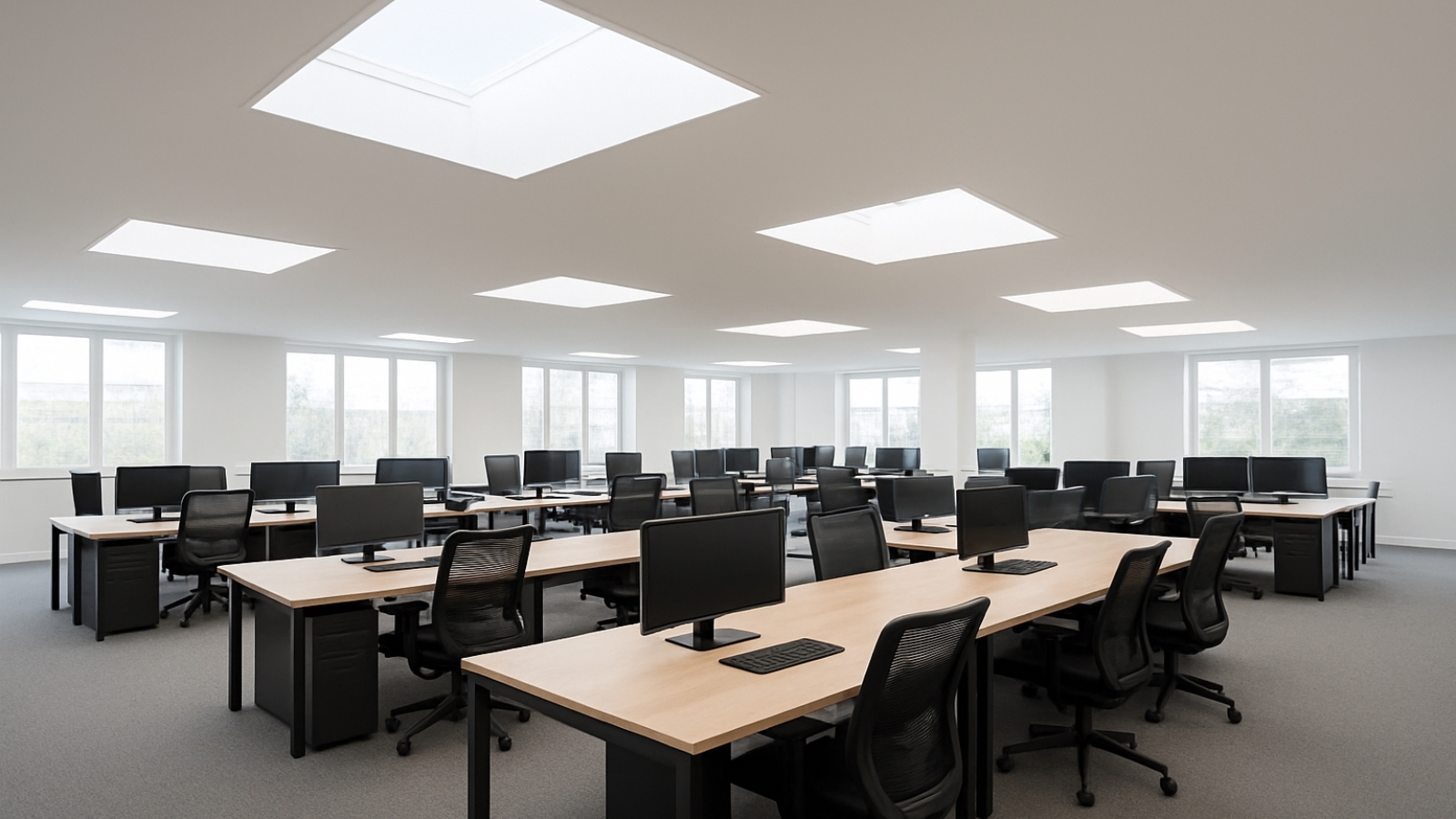
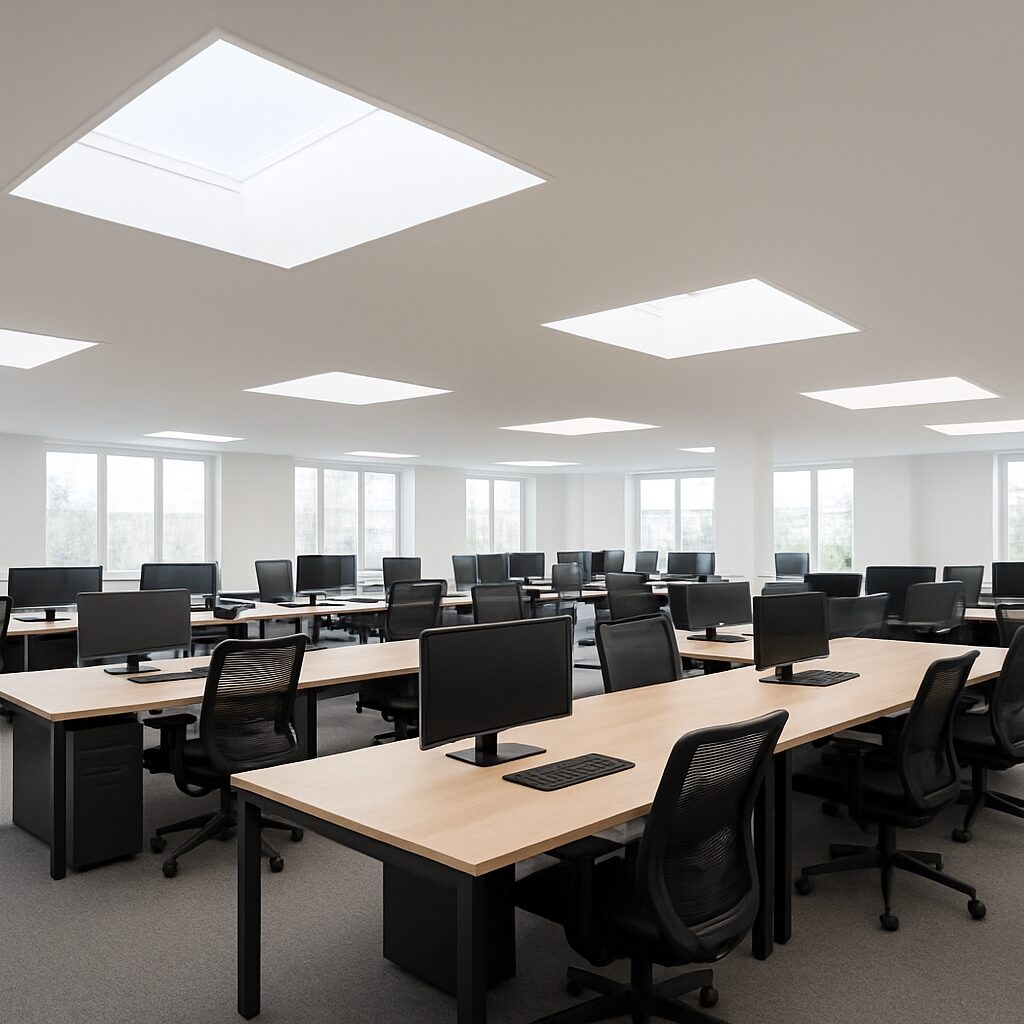
  • Corporate office retrofit (static): A 1,000 m² interior floor with no perimeter windows used large static panels (600×600 and 600×1200 panels) to create a consistent daylight-like ceiling. Outcome: improved occupant satisfaction and lower artificial lighting complaints.
  • Wellness center (dynamic): A spa installed a 12 m × 4 m dynamic ceiling that simulates morning-to-evening skies. Outcome: higher dwell times, favorable guest feedback, and premium positioning in marketing material.

10. Practical checklist — How to choose (step-by-step)

  1. Define objectives — Is your priority consistent ambient light, circadian support, or immersive experience?
  2. Budget — Determine initial budget and acceptable O&M costs. Dynamic will command a premium.
  3. User profile — Consider occupants: focus-intensive (static) vs experiential/wellness (dynamic).
  4. Integration needs — Do you require BMS/IoT integration, scheduling, or remote updates?
  5. Design & scale — Tile sizes, seams, ceiling types and access for maintenance.
  6. Content & commissioning — For dynamic installs, allocate budget/time for content creation and calibration.
  7. Energy plan — Use daylight harvesting, occupancy sensors and schedules to minimize running costs.
  8. Maintenance plan — Confirm warranties for LEDs and control hardware; schedule diffuser cleaning and software updates.

11. FAQs

Will dynamic skylights distract employees?

If poorly configured, yes. But carefully tuned, slow animations and subtle CCT shifts can enhance well-being without distraction. Offer local dimming override for individual comfort.

Do dynamic systems need internet?

No, as they run on local networks or standalone media servers.

How do I avoid visible seams in large dynamic ceilings?

Use high-fidelity drivers, precise mechanical alignment, and color calibration across panels. Commissioning by an experienced integrator is essential.

LED skylight system with tunable white control

What Are Artificial Skylights? How They Work & Why They’re Needed

Light shapes how we feel, work, rest, and live. For many indoor spaces — basements, interior offices, retail stores, or rooms with poor natural light — traditional windows or skylights may not always be possible. This is where artificial skylights (also called simulated skylights / virtual skylights / fake skylight) come in: they bring the feeling and benefits of daylight into enclosed spaces, elevating both design and well-being.

In this guide, we’ll explore:

  1. What exactly an artificial skylight is?
  2. How these systems are built and operate (the tech)?
  3. Different types of systems (static, dynamic)
  4. Key benefits — health, design, energy, and more
  5. Practical applications — where they make most sense
  6. Challenges and considerations
  7. Why are more architects and homeowners choosing them?

Let’s dive in.


1. What Is an Artificial Skylight?

An artificial skylight is a lighting fixture designed to mimic the look and feel of natural daylight coming from the sky — but without having to cut a hole in your roof. Instead of relying on sunlight, these systems use LED-based lighting in combination with optical diffusers, light filters, and sometimes processors that modulate light over time.

Some people also call them simulated skylights, virtual skylights, or Ceiling skylight lights, because they often mount flush into a ceiling or false ceiling grid. Because they’re entirely electrical, they offer huge flexibility: you can install them in basements, windowless rooms, or even on walls.

At their heart, these skylight systems aim to recreate the characteristics of daylight — brightness, color temperature, uniform diffusion — and sometimes mimic how daylight changes over the course of a day. Daylighting experts describe how natural light changes throughout the day in intensity, direction, and spectral quality — principles that artificial skylights are engineered to replicate.


2. How Artificial Skylights Work

To appreciate the magic, it helps to understand how these systems are built and controlled. Here’s a breakdown of how they typically work:

2.1 Core Components

  • LED Modules: The backbone of most artificial skylight systems is a high-quality LED array. These LEDs are often “tunable-white,” meaning their color temperature (warm to cool) can be adjusted to simulate different times of day.
  • Diffusers & Light Guides: Simply shining LED light upward wouldn’t produce the natural, soft glow of sky light. So, these systems use optimized diffusers (often micro-structured) and light-guiding plates to spread the light evenly, eliminating hotspots and harsh shadows.
  • Optical Filters or Lenses: To replicate the subtle quality of daylight, optical filters may be placed in the path of light. These filters tailor the spectral output, adjusting color rendering, saturation, and beam angles.
  • Control Electronics: This is where things get powerful. Systems have built-in drivers, dimmers, and controllers that regulate brightness, color temperature, or dynamic effects. These controllers can be:
    • Manual: Using a wall switch, remote, or dial
    • Smart / Automated: Via an app, or integrated into a building automation system (BMS)
    • Dynamic Processors: For systems that simulate moving clouds, sun position, or even a starry night sky.
  • Mounting Framework: The panel is usually mounted on the ceiling (or under a false ceiling), either recessed or surface-mounted. Because there’s no need to cut the roof, installation is simpler and less invasive.

2.2 Operating Principles

  • Tunable White Lighting: By mixing LEDs of different color temperatures (warm white + cool white), the system can produce different “sky conditions.” For example, morning light might be cooler and brighter, while evening or sunset simulation could lean warm and soft.
  • Dynamic Simulation (optional): More advanced systems also simulate motion — clouds drifting across the sky, or even a simulated night sky with stars — using video processing. These systems loop animations or real-time sky visuals and sync them with LED drivers.
  • Automation and Timing: Many artificial skylights are programmed to follow a 24-hour light cycle. This means the brightness and color temperature shift throughout the day, replicating the natural progression of sunlight. Alternatively, users can manually override settings.
  • Sensor Integration: In some smart systems, ambient light sensors track the actual daylight (if available) and adjust the artificial skylight output accordingly — conserving energy when natural daylight is sufficient, or boosting light when it’s overcast or dark.

3. Types of Artificial Skylights

Not all artificial skylights are the same. Depending on design preference, budget, and function, you’ll typically see two broad categories:

3.1 Static Artificial Skylights

  • Definition: These systems produce a steady, uniform light that mimics a fixed daylight condition.
  • Advantages: Simpler design, lower cost, easier installation, and fewer control complications.
  • Use Cases: Ideal for offices, retail areas, corridors, or any place where a consistent daylight-like glow is needed.

3.2 Dynamic / Animated Artificial Skylights

  • Definition: These include a video processor or animation engine, which drives a sequence — like moving clouds, a sun journey, or even a starry sky at night.
  • Advantages: High visual realism, immersive feel, stronger biophilic effect, and higher “wow factor.”
  • Use Cases: Premium homes, wellness spaces, meditation rooms, spa centers, basements that want to feel open, or luxury lobbies.

4. Why Artificial Skylights Are Needed — Key Benefits

Why should someone invest in an artificial skylight lighting solution (or fake skylight panel) rather than just use regular LED panels or ceiling lights? Here’s why they make sense:

4.1 Psychological & Health Benefits

  • Mimicking Natural Daylight: Exposure to daylight has profound effects on mood and mental health. Artificial skylights simulate that effect, helping to replicate some of the psychological benefits of being outdoors.
  • Supporting Circadian Rhythm: A good skylight system can be synced to a 24-hour cycle, adjusting light color and intensity to support the body’s natural circadian rhythm. This can help regulate sleep, boost alertness during the day, and reduce fatigue. Experts now agree that indoor lighting should be designed to support the body’s biological clock by aligning color temperature and intensity with natural daylight patterns.
  • Increase Productivity & Well-Being: Bright, naturally-tuned light in workspace environments can stimulate productivity. Studies show that better lighting has links to improved focus, creativity, and even fewer errors.

4.2 Design & Architectural Advantages

  • Aesthetic Appeal: Artificial skylights add a premium finish to any ceiling. They feel like an architectural element, not just a source of illumination.
  • No Structural Changes Required: Unlike traditional skylights, these don’t require cutting the roof or making architectural changes. The ceiling skylight light panel integrates into false ceilings and even the main ceiling seamlessly.
  • Flexible Shapes & Sizes: Panels can be custom-made — square, rectangular formations — and fitted into any ceiling grid or ceiling cavity.

4.3 Energy Efficiency & Practicality

  • LED Efficiency: Because these systems use LEDs, they consume much less power than many conventional lighting systems while delivering high luminance.
  • Smart Controls for Savings: With automated dimming or daylight harvesting (where the system automatically reduces output when natural light is available), you save on power bills.
  • Longevity: High-quality LED modules last tens of thousands of hours. When paired with good management, your artificial skylight system can offer years of reliable performance.

4.4 Versatility & Adaptability

  • Installation in Windowless Areas: Basements, internal offices, enclosed corridors, and retail interiors are spaces that benefit most. A virtual skylight or simulated skylight gives these spaces a sense of openness.
  • Wellness & Healthcare: Spaces like clinics, waiting rooms, or therapy centers benefit strongly from light that feels more natural — boosting patient comfort.
  • Residential Applications: For luxury homes, meditative rooms, or simply to elevate interior aesthetics, fake skylight panels add a design statement.

5. Real-World Use Cases

Let’s look at some scenarios where artificial skylight systems shine (pun intended):

5.1 Office Spaces

Imagine a windowless conference room or an interior office cubicle: adding a simulated skylight panel overhead immediately lifts the ambiance. During the morning session, the light could be tuned to a cool, bright tone to maximize alertness. As meetings wind down in the afternoon, the color temperature can warm up, reducing glare and making the space feel more comfortable.

5.2 Healthcare & Wellness Centers

Hospitals, clinics, and therapy centers are increasingly adopting simulated skylights because they can positively influence patient moods and support recovery. A ceiling skylight light that slowly transitions through the day can feel more natural and calming than static fluorescent lighting. In waiting lounges or treatment rooms, a virtual skylight helps reduce stress and provides a therapeutic atmosphere.

5.3 Basements & Interiors in Homes

Basements or windowless interiors often feel claustrophobic and dark. A well-designed LED skylight system on the ceiling can visually “open up” the space, making it feel more airy and welcoming. Coupled with dynamic effects (like gently drifting clouds), you can even simulate a relaxing daytime sky in your very own underground movie room or reading nook.

Artifical Skylight from Skylicht - Basement Application

5.4 Retail & Hospitality Spaces

Flagship stores, luxury boutiques, or hotel lobbies can use artificial daylighting to create a premium customer experience. A virtual skylight adds a sense of drama, elegance, and natural daylight to interiors, making them more inviting and Instagram-friendly.


6. Challenges & Key Considerations

While artificial skylights are powerful, there are some important things to think about before jumping in:

6.1 Initial Cost

These systems are more expensive than standard LED panels. The cost comes not just from LEDs, but from diffusers, controllers, and possibly dynamic-video modules. However, the total cost of ownership can be justified through energy savings, improved well-being, and increased property value.

6.2 Design & Size Constraints

Custom panels or very large skylight installations may require design coordination with architects or ceiling contractors. If using dynamic effects, you’ll need space for the video / processor equipment. The structural design of the ceiling must also be considered.

6.3 Maintenance

Though LED systems are long-lasting, diffusers and optical components need cleaning to maintain uniformity. Control systems may require periodic calibration or firmware updates. Users should plan for occasional maintenance.

6.4 User Adoption

If occupants are used to standard lighting, switching to a simulated skylight — especially a dynamic one — might feel odd at first. There may be a perceptual lag, or users might find the changes subtle (or too strong) until settings are optimized. Proper commissioning and user training are important.

6.5 Energy Management

While energy-efficient, these systems still draw power. If the artificial skylight is set too bright or run continuously without appropriate control, energy consumption might offset some of its savings. Smart control and automation become very important.


7. Why Artificial Skylights Are Becoming More Popular

Given the benefits and flexibility, it’s no surprise that more architects, developers, and homeowners are embracing these systems. Here are some driving factors:

  1. Urbanization and Windowless Architecture
    In high-density developments, many rooms simply don’t have enough external walls or roof access. Artificial skylights solve this by providing a feeling of daylight, even deep inside the building.
  2. Focus on Well-Being & Mental Health
    The modern design narrative increasingly values biophilia, or the connection between humans and nature. Simulated daylight helps bring that connection indoors, fostering well-being, comfort, and happiness.
  3. Smart / Human-Centric Lighting Trends
    With the rise in circadian lighting and human-centric lighting design, people want more than static illumination. A LED skylight system with tunable white light and automation is a perfect fit.
  4. Energy & Sustainability
    As buildings push toward green certifications, efficient lighting that cuts down on energy usage but still delivers quality light becomes very attractive. Artificial skylights tick both boxes.
  5. Experiential Design
    Designers want to create not just functional spaces, but emotional ones. Virtual skylights with dynamic effects (cloud motion, sun paths) create memorable, immersive environments.

8. Choosing the Right Artificial Skylight Solution

If you’re considering an artificial skylight for your next project (or renovation), here are some tips to make a smart choice:

  1. Define Your Goal
    • Is your primary need aesthetic (just “make ceiling look like sky”)?
    • Or do you want health benefits (support circadian rhythm or well-being)?
    • Or both?
  2. Decide Between Static vs Dynamic
    • Static is simpler, more cost-effective, and works great for ambient lighting.
    • Dynamic adds realism and a biophilic feel, but has higher complexity and cost.
  3. Choose Controls
    • Do you want manual control (switch, dimmer)?
    • Or smart control (app, automation, IoT)?
    • Do you need scheduling, ambient light sensing, or syncing with other building systems?
  4. Panel Size & Placement
    • Work with your architect or contractor to design panel sizes that fit your ceiling grid or structure.
    • Consider how many panels, their layout, and where they will deliver the most impact.
  5. Inspect Quality Metrics
    • Color Rendering Index (CRI): A higher CRI gives more natural and accurate color.
    • Color Temperature Range: Systems that go from cool daylight to warm evening light are more versatile.
    • Luminous Output: Check lux (or lumens) to know how bright your panel will be at a given distance.
  6. Maintenance Planning
    • Ask about cleaning schedules for diffusers.
    • Confirm how control systems can be updated or serviced.
    • Check warranty for both LED modules and control electronics.
  7. Energy Considerations
    • Estimate power usage based on brightness levels, usage hours, and control strategy.
    • Use dimming, scheduling, or daylight-harvesting to reduce power consumption when full brightness isn’t needed.

9. Myths & Misconceptions

Here are a few common misunderstandings about artificial skylights — and what the truth usually is:

  • Myth: “It’s just a decorative panel, not real light.”
    Truth: Modern systems use full-spectrum, tunable white LEDs with high CRI, so the light quality can be very close to natural sunlight.
  • Myth: “They use a lot of electricity.”
    Truth: While they do consume power, efficient LEDs + smart controls (like dimmers or daylight-sensing) significantly reduce energy usage.
  • Myth: “Installation is difficult & destructive.”
    Truth: Because they integrate into ceilings or false ceilings, artificial skylights typically don’t require cutting the roof; they are much less invasive than real skylights.
  • Myth: “Maintenance will be a hassle.”
    Truth: Maintenance needs are quite manageable — LED lifespan is long, diffusers might need occasional cleaning, and control systems are typically reliable.

10. Future of Artificial Skylights

As technology advances, several trends are shaping the future of artificial skylight systems:

  • Smarter Integration: Deeper integration with building automation systems (IoT, BMS) allows for predictive lighting control based on occupancy, time of day, or weather.
  • Personalized Light: Systems may increasingly use AI or sensors to adapt lighting profiles to individual preferences or biological needs. For example, light could change subtly based on your energy level, mood, or sleep schedule.
  • More Realistic Simulation: Future virtual skylights will simulate not just sunlight but dynamic skies, cloud patterns, starfields, even auroras or seasonal changes — making the indoors feel like an extension of the outdoor sky.
  • Energy-Positive Lighting: With advances in energy-efficient LEDs and better control strategies, artificial skylight panels could be part of net-zero lighting strategies in smart, green buildings.
  • Cost Reduction: As the technology becomes more widespread, the cost of high-fidelity artificial skylight panels will go down, making them more accessible for residential and smaller commercial projects.

Conclusion

Artificial skylights — also known as simulated skylightsvirtual skylights, or ceiling skylight lights — are a compelling lighting innovation. They bring the essence of daylight into spaces that otherwise lack natural light, using LED skylight systems and diffusers to replicate not just brightness but a natural, soft sky-like glow.

Their benefits span psychology (improving mood and supporting circadian rhythm), architecture (adding design richness without structural alterations), and sustainability (energy-efficient, smart-controlled lighting). While there are costs and design considerations to keep in mind, the return in terms of well-being, space value, and experiential quality is strong.

For anyone designing or renovating an indoor space that feels dark, enclosed, or disconnected from nature, a fake skylight panel or a full LED skylight lighting solution can be a transformative addition.

If you’re exploring artificial skylights for your next project, Skylicht can help you design, choose, and install the perfect system — combining visual beauty with smart technology to bring the sky indoors.

biophilic design

Biophilic Design With Artificial Skylights: Transforming Windowless Spaces

In modern architecture, wellness-driven design is rapidly becoming a top priority. As workspaces grow denser, urban homes get compact, and commercial interiors rely more heavily on artificial environments, people are spending over 90% of their time indoors. This shift has amplified the need for biophilic design — an approach that reconnects humans with nature by integrating natural elements into built environments.

One of the most powerful tools enabling this shift is the artificial skylight, a lighting system that simulates the appearance, color, and behaviour of natural sunlight. For windowless spaces or areas with limited access to daylight, artificial skylights deliver an immediate, dramatic transformation.

This article explores how biophilic design combined with artificial skylights can positively influence health, mood, productivity, aesthetics, and the overall human experience indoors.


1. Understanding Biophilic Design: Why It Matters

Biophilic design isn’t just an aesthetic trend. It is rooted in neuroscience, psychology, and evidence-based research. The core belief is simple:


Humans are hardwired to thrive in environments that mimic nature.

1.1 The science behind biophilia

Studies show that natural light, greenery, textures, and organic patterns reduce stress, improve cognitive performance, and regulate emotions.
According to research published by NCBI, naturalistic lighting has measurable effects on circadian rhythms, sleep quality, and overall mental well-being.

1.2 Why modern interiors fail

Despite advancements in architecture, many environments still struggle with:

  • Poor daylight access
  • Deep floor plates
  • Basement-level rooms
  • Enclosed meeting spaces
  • Long corridors without windows

This makes occupants feel confined, fatigued, and disconnected from the outside world.

1.3 Biophilic design as the solution

Artificial skylights offer a way to reconnect people with a sense of sky, space, and openness — even in buildings where natural light is physically impossible.


2. What Are Artificial Skylights?

Artificial skylights / Virtual Skylights/ Fake Skylights are advanced lighting panels that mimic the optical depth, brightness, and color of the real sky. Some systems simulate:

  • A blue sky with soft white clouds
  • Dynamic sunlight movement
  • Changing color temperatures
  • A sense of infinite visual depth

They work by combining LED technology, diffusion optics, light engines, and sometimes video-based sky simulations.

2.1 Why they matter for biophilic design

Artificial skylights bring:

  • Perceived natural illumination
  • Psychological openness
  • A visual connection to the sky
  • Reduced claustrophobia
  • Higher comfort and mood elevation

These are key pillars of biophilic design.


3. How Biophilic Lighting Influences Human Wellness

Lighting plays a central role in circadian regulation, hormonal balance, and mental clarity.

3.1 Circadian rhythm alignment

According to global photonics research, indoor lighting should support natural rhythms by mimicking the color and intensity variations of real daylight.

Artificial skylights reproduce daylight-like qualities even in fully enclosed rooms, supporting:

  • Better sleep-wake cycles
  • Enhanced energy throughout the day
  • Lower stress levels
  • Reduced eye strain

3.2 Mood enhancement

Exposure to daylight has been linked with elevated serotonin and dopamine levels. Artificial skylights replicate these effects through high CRI, natural colour tones, and atmospheric visual depth.

3.3 Productivity & performance

Workspaces with daylight-like illumination show:

  • Better concentration
  • Faster decision-making
  • Lower fatigue
  • Improved creativity

This makes biophilic skylight systems ideal for offices, classrooms, and commercial environments.


4. Benefits of Using Artificial Skylights in Biophilic Design

4.1 Creates the illusion of open space

One of the biggest challenges in interior design is making windowless rooms feel spacious. Artificial skylights visually “open up” ceilings and create psychological relief.

4.2 Natural-looking light distribution

Advanced simulated skylights replicate natural sky gradients — a capability that normal LED panels cannot achieve.

4.3 Zero heat gain

Unlike real skylights, artificial skylights don’t cause:

  • Heat ingress
  • UV fading
  • Glare
  • Weather-related issues

4.4 Flexibility in placement

Install anywhere:

  • Basements
  • Lobbies
  • Retail stores
  • Clinics
  • Corridors
  • Conference rooms

4.5 Consistent daylight all day

Weather changes, pollution, and time-of-day variations don’t affect artificial skylights.


5. Where Artificial Skylights Are Making the Biggest Impact

5.1 Commercial Offices

Open-plan workplaces are using skylight panels to counter enclosed cubicles and deep interiors.

Skylight by Skylicht

5.2 Retail Stores

Artificial skylights create a premium ambience and visual drama that increases dwell time and purchase intent.

5.3 Healthcare

Hospitals use them to reduce stress for patients in MRI rooms, waiting areas, and ICUs.

5.4 Hospitality

Hotels and spas integrate skylight ceilings to enhance relaxation environments.

5.5 Residential Projects

Urban homes with limited sunshine benefit from skylight panels in:

  • hallways
  • kitchens
  • converted basements
  • home offices
Dynamic Skylight by Skylicht

6. Static vs Dynamic Skylights in Biophilic Design

6.1 Static Skylights

Provide a constant, daylight-like bright sky.

Benefits:

  • Lower cost
  • Minimal maintenance
  • Great for corridors & utility spaces

6.2 Dynamic Skylights

Simulate cloud movement, shifting sunlight, evolving tones.

Benefits:

  • Hyper-realistic
  • Best for premium spaces
  • Strongest emotional impact

Dynamic systems offer truly immersive biophilic experience.


7. Techniques for Using Artificial Skylights in Biophilic Interior Design

7.1 Combine with natural textures

Pair skylights with:

  • wood
  • stone
  • greenery
  • neutral palettes

to enhance realism.

7.2 Use in clusters or patterns

Multiple skylights installed in a grid create the feel of a natural atrium.

7.3 Use in calming zones

Ideal for meditation rooms, wellness zones, and healthcare areas.

7.4 Layer with indirect lighting

This softens shadows and enhances natural ambience.

7.5 Integrate virtual skylights into false ceilings

Creates a seamless, architectural finish.


8. Real-World Case Examples

Here are a few standardized examples of how artificial skylights transform real spaces:

8.1 Office deep-floor plates

A corporate IT office replaced standard LED panels with dynamic skylights, resulting in a:

  • 35% reduction in employee complaints about lighting
  • 22% improvement in visual comfort metrics
  • measurable psychological relief in enclosed areas

8.2 Retail premium zones

A luxury retail store installed static skylights above feature zones to simulate natural daylight on products. Customers perceived colours more accurately and the store experienced a visible boost in engagement.

8.3 Healthcare patient rooms

Hospitals report reduced patient anxiety and better cooperation during procedures when artificial skylights are installed in MRI or treatment rooms.

Conclusion

Biophilic design is no longer optional — it’s becoming a fundamental principle of modern architecture. Artificial skylights deliver a unique, powerful way to bring the benefits of nature into windowless interiors. Whether you want the emotional uplift of a blue sky, the calm of soft daylight, or the spatial openness that skylights provide, simulated sky systems enable designers to create healthier, more human-centered environments.

For offices, retail, hospitality, healthcare, and residential spaces, biophilic lighting design represents the future of indoor wellness — and artificial skylights are at the heart of this transformation.