Bring the sky indoors — but which approach fits your project?
Artificial skylights (also called simulated/ virtual skylights/ faux skylights) are no longer a single product category: they range from simple, beautifully diffused static panels to advanced, animated systems that simulate cloud movement, sun position and even starfields. Choosing between static and dynamic simulated skylights affects cost, installation complexity, energy use, occupant comfort, design impact, and long-term maintenance. This guide compares the two approaches in depth so that architects, interior designers, facility managers, and homeowners can make an informed choice.
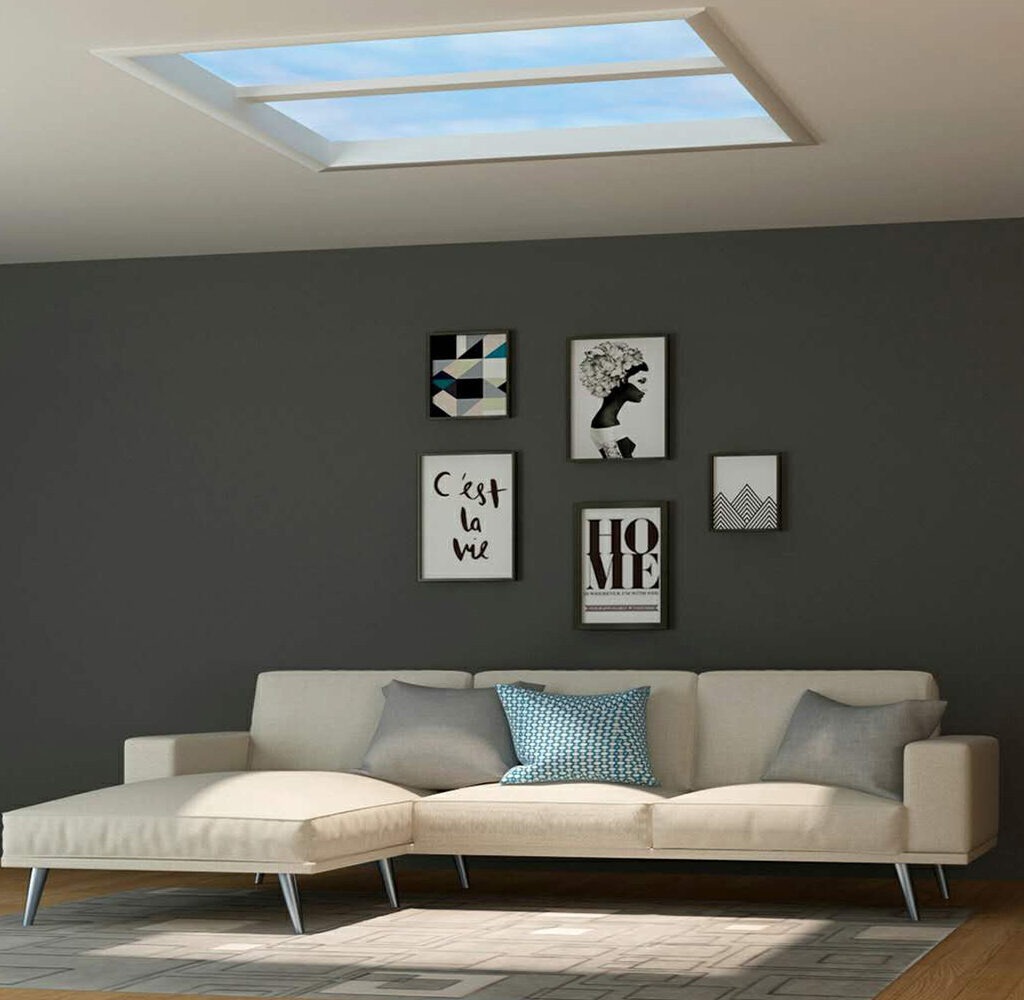
Quick Snapshot — The Short Answer
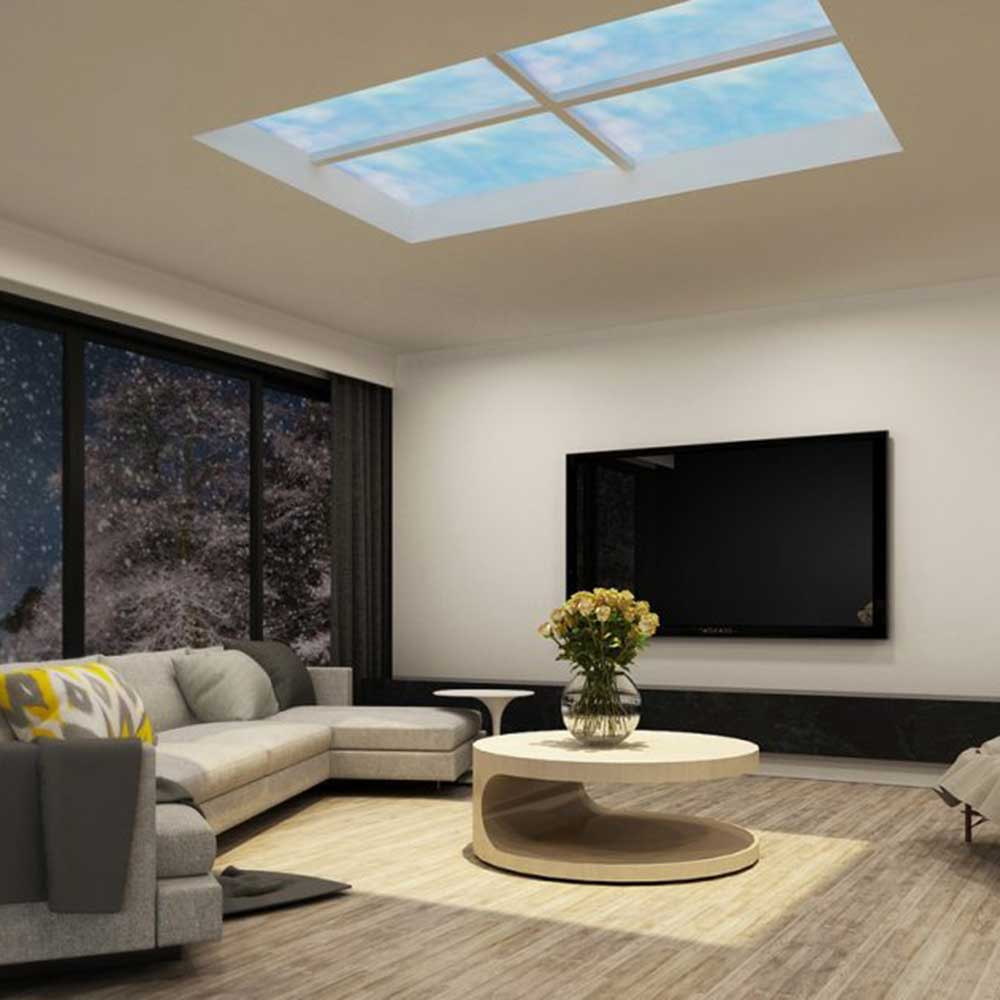
- Static simulated skylights = fixed daylight-like illumination. Lower cost, simpler install, lower maintenance, excellent for general ambient light, and consistent appearance.
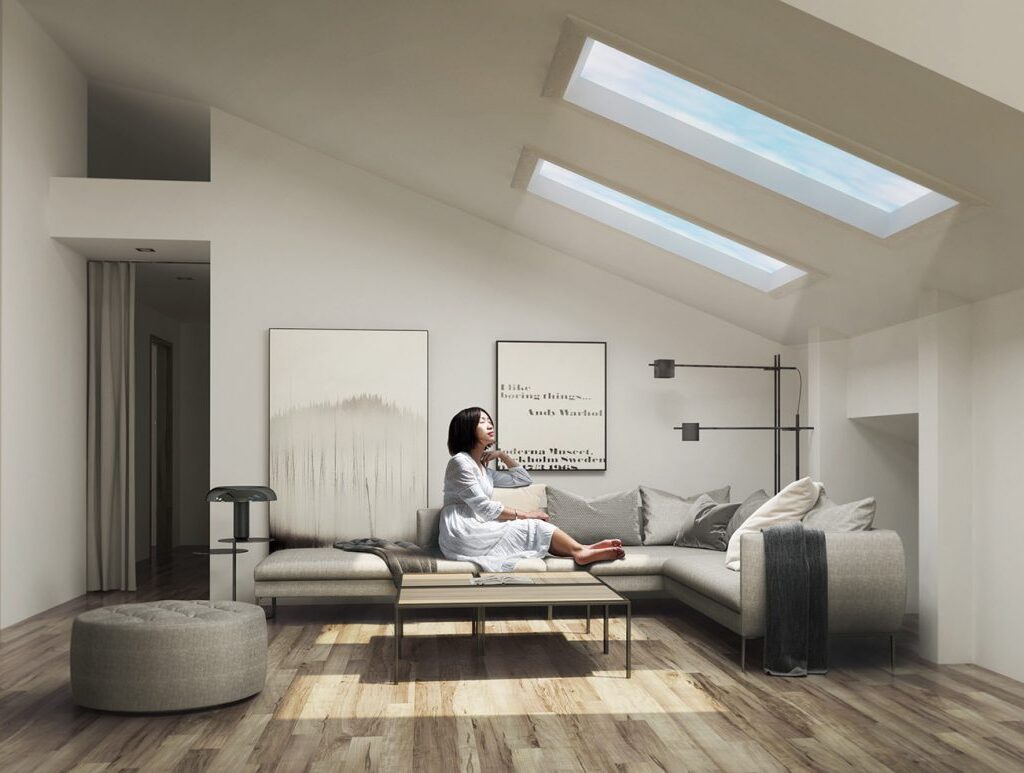
- Dynamic simulated skylights = time-varying or animated sky simulations (cloud movement, dawn-to-dusk CCT shifts, starfield modes). Higher realism and biophilic impact, more controls and complexity, higher cost, and slightly higher maintenance demands.
Comparison Table: Static vs. Dynamic Simulated Skylights
| Feature | Static Simulated Skylight | Dynamic Simulated Skylight |
| Primary Function | Consistent, high-quality ambient daylight reproduction. | Immersive experience with motion and time-based transitions. |
| Visual Effect | Constant, evenly distributed light. | Cloud movement, dawn-to-dusk profiles, night stars. |
| Technical Core | LED arrays + high-performance diffusers. | LED backbone + video processor + pixel-mapped drivers + content engine. |
| Control System | Basic dimming, CCT control | Dedicated media server/box, scheduling software, with dimming & CCT control |
| Biophilic Impact | Provides a calming, stable daylight field; reduces “closed-in” feeling. | High engagement; perceived motion reduces stress and increases “wow” factor. |
| Occupant Suitability | Best for focus-heavy areas (libraries, classrooms, open offices). | Best for experiential spaces (lobbies, spas, luxury residential, therapy). |
| Complexity | Low; fits standard ceiling grids easily. | High; requires coordination for depth, processors, and seamless tiling calibration. |
| Upfront Cost | Comparatively Lower (driven by panel size and CRI). | Higher (adds hardware, processors, and mounting kits). |
| Maintenance | Minimal (LED life and cleaning). | Minimal (LED life and cleaning). |
Now let’s read in detail a full, practical comparison — from tech and design to real use cases and purchasing guidance for static vs dynamic skylight.
1. What do we mean by “static” and “dynamic” Skylight
Static simulated skylight
A static system is essentially a high-quality, well-diffused LED panel tuned to reproduce desirable daylight characteristics (brightness, uniformity, CRI, color temperature). Once mounted into the ceiling, it provides a constant, evenly distributed light without animation. Many static panels are tunable-white (can change between cool/warm CCT), but the light field itself does not simulate motion.
Dynamic simulated skylight
A dynamic simulated skylight system includes animation or time-based changes: cloud movement, changing sun angle, dawn-to-dusk color temperature profiles, or even nighttime star simulations. These systems couple LED fixtures with a media/animation engine and control electronics to produce a moving visual effect on a ceiling “sky” surface.
2. Core technical differences
Light source & quality
- Static: Tunable white LED arrays or high-CRI fixed white LEDs, combined with engineered diffusers and light guides to remove hotspots. The focus is on spectral quality (CRI), uniformity, and consistent luminance across the panel.
- Dynamic: Same LED backbone, but paired with a video/data processor and a pixel-mapped or segmented driver architecture to render motion. Dynamic realism depends on resolution (number of controllable zones), spectral fidelity, and the quality of the content engine.
Optics & diffuser
- Static: Diffuser design is optimized to create an even, natural-looking glow. Microstructured diffusers, light-guide plates and scattering films hide LED sources and make the panel appear like a remote light source (the “sky”).
- Dynamic: Diffusers must still provide uniformity but also allow animation to be perceived. Some dynamic solutions use layered optics or rear-projection techniques for higher realism.
Controls & integration
- Static: Basic dimming, CCT control, simple schedules or integration with building automation (BMS) for on/off or daylight harvesting.
- Dynamic: Requires a control server or media box, content scheduling software, often network connectivity (Ethernet or Wi-Fi), and integration options for synchronization with building time schedules or sensors.
3. Visual realism & human factors
Static panels
- Provide a consistent, calming daylight field.
- Excellent for occupants who prefer stable lighting conditions (libraries, classrooms, open offices where motion could distract).
- Great for spaces where a “permanent daylight illusion” is desired without visual changes.
Dynamic simulated skylight systems
- Offer stronger biophilic engagement — perceived motion (slow cloud drift) can reduce stress and give a sense of outdoors.
- Dynamic CCT shifts (cooler daytime, warmer evening) can support circadian rhythm when scheduled appropriately. (See research linking light exposure to circadian entrainment and well-being.)
- Risk: poorly tuned or overly fast animations can be distracting or fatiguing. Commissioning content carefully is crucial.
4. Use-case suitability
When to choose static
- Standard office floors require consistent, non-distracting light.
- Retail spaces focusing on product appearance, where no motion should detract from merchandise.
- Corridors, meeting rooms, classrooms, and spaces with many occupants and low tolerance for moving images.
- Projects with tighter budgets or retrofit constraints.
When to choose dynamic
- Reception areas, lobbies, showrooms, wellness rooms, spa centers, and luxury residential spaces where experience and “wow” factor matter.
- Healthcare recovery rooms and therapy spaces where carefully designed light schedules can improve patient comfort (but only with clinical oversight).
- Spaces intended for relaxation or creative inspiration (meditation rooms or design studios).
5. Cost comparison & total cost of ownership
Upfront cost
- Static: Lower. Costs driven by panel size, LED quality (CRI rating), and diffuser quality.
- Dynamic: Higher. Adds processor/media hardware, custom content creation, segmented drivers, plus potential network/hardware integration.
Operational cost
- Static: Lower energy use when dimmed or scheduled; straightforward maintenance.
- Dynamic: Could be higher if run at peak brightness for long durations or if hardware/processor draws additional power. Smart scheduling and daylight harvesting mitigate this.
Maintenance & upgrades
- Static: Minimal — LED replacement after long lifetimes; diffuser cleaning.
- Dynamic: More involved — software updates, content refreshes, potential replacement of control hardware. However, software update capability allows visual refreshes without hardware changes.
6. Design integration & architectural considerations
Ceiling type & installation
- Static panels can seamlessly fit into standard ceiling grids or be recessed into plasterboard ceilings.
- Dynamic systems may require additional depth for processors or specialized bezel/frame work; careful coordination is needed with ceiling contractors, HVAC and acoustic design.
Scale & tiling
- Static panels tile readily for consistent coverage.
- Dynamic systems need careful alignment and content calibration across multiple tiles to avoid visible seams and to ensure continuity of motion.
Acoustic & HVAC coordination
- Both systems should be planned with HVAC diffusers and speakers to avoid conflicts. Dynamic installations in sensitive environments should consider sound zoning and occupant feedback.
7. Content, controls, and human-centred design
Content matters
- For dynamic systems, the content (the animation) determines acceptance. Slow, subtle cloud movement and naturalistic color transitions are preferred. Avoid high-frequency motion or abrupt color shifts unless thematically relevant.
Controls & personalization
- Provide local overrides and user controls where appropriate. In workplaces, allow users to adjust intensity within safe parameters.
- For circadian strategies, schedule daily CCT curves (morning cool, noon bright/cool, evening warm) and tie to occupancy sensors.
8. Energy & sustainability aspects
- LEDs are efficient in both static and dynamic systems.
- Dynamic simulated skylight system does not necessarily consume more energy if intelligently controlled — e.g., animations can be run at lower intensity, and the system can harvest daylight.
- Energy-saving tactics: daylight harvesting, occupancy sensors, scheduled dimming and using high-efficiency drivers.
9. Real world examples & case studies (illustrative)
- Corporate office retrofit (static): A 1,000 m² interior floor with no perimeter windows used large static panels (600×600 and 600×1200 panels) to create a consistent daylight-like ceiling. Outcome: improved occupant satisfaction and lower artificial lighting complaints.
- Wellness center (dynamic): A spa installed a 12 m × 4 m dynamic ceiling that simulates morning-to-evening skies. Outcome: higher dwell times, favorable guest feedback, and premium positioning in marketing material.
10. Practical checklist — How to choose (step-by-step)
- Define objectives — Is your priority consistent ambient light, circadian support, or immersive experience?
- Budget — Determine initial budget and acceptable O&M costs. Dynamic will command a premium.
- User profile — Consider occupants: focus-intensive (static) vs experiential/wellness (dynamic).
- Integration needs — Do you require BMS/IoT integration, scheduling, or remote updates?
- Design & scale — Tile sizes, seams, ceiling types and access for maintenance.
- Content & commissioning — For dynamic installs, allocate budget/time for content creation and calibration.
- Energy plan — Use daylight harvesting, occupancy sensors and schedules to minimize running costs.
- Maintenance plan — Confirm warranties for LEDs and control hardware; schedule diffuser cleaning and software updates.
11. FAQs
Will dynamic skylights distract employees?
If poorly configured, yes. But carefully tuned, slow animations and subtle CCT shifts can enhance well-being without distraction. Offer local dimming override for individual comfort.
Do dynamic systems need internet?
No, as they run on local networks or standalone media servers.
How do I avoid visible seams in large dynamic ceilings?
Use high-fidelity drivers, precise mechanical alignment, and color calibration across panels. Commissioning by an experienced integrator is essential.